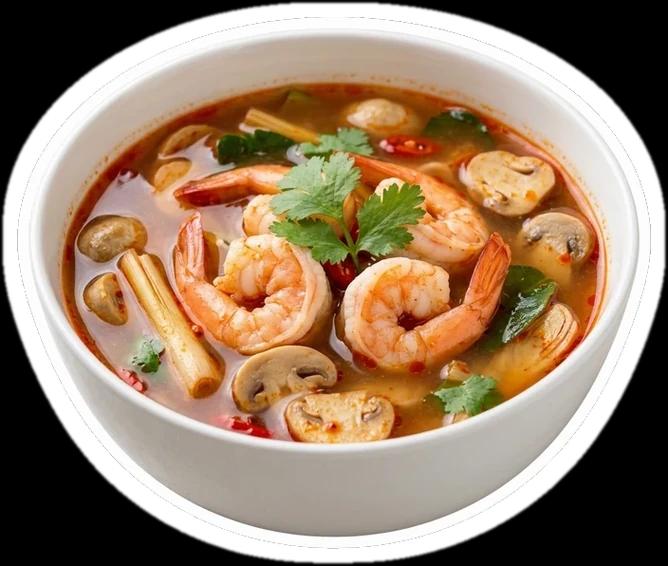
Thai food: 10 dishes to know
Thai food balances sour, sweet, salty and spicy in almost every dish. These ten are the ones to know, from noodle stalls to curries and sweets, with how each is made.
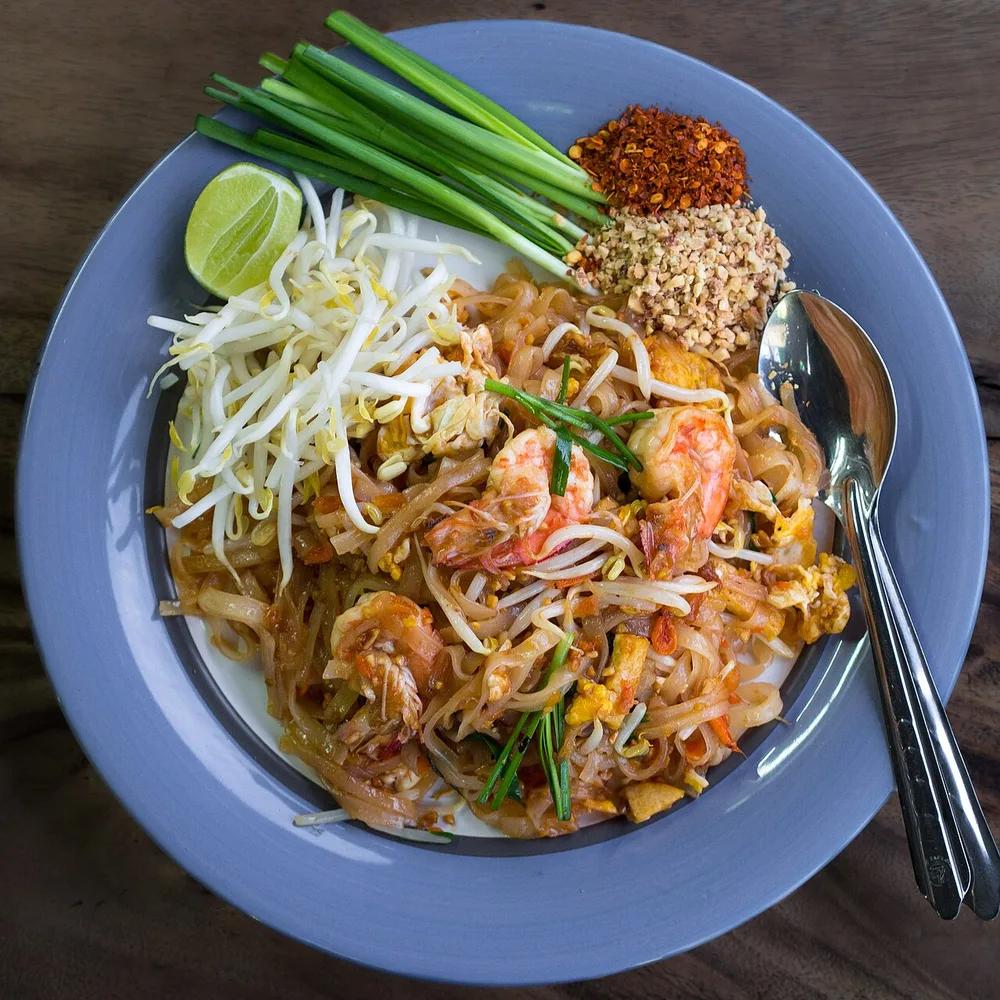
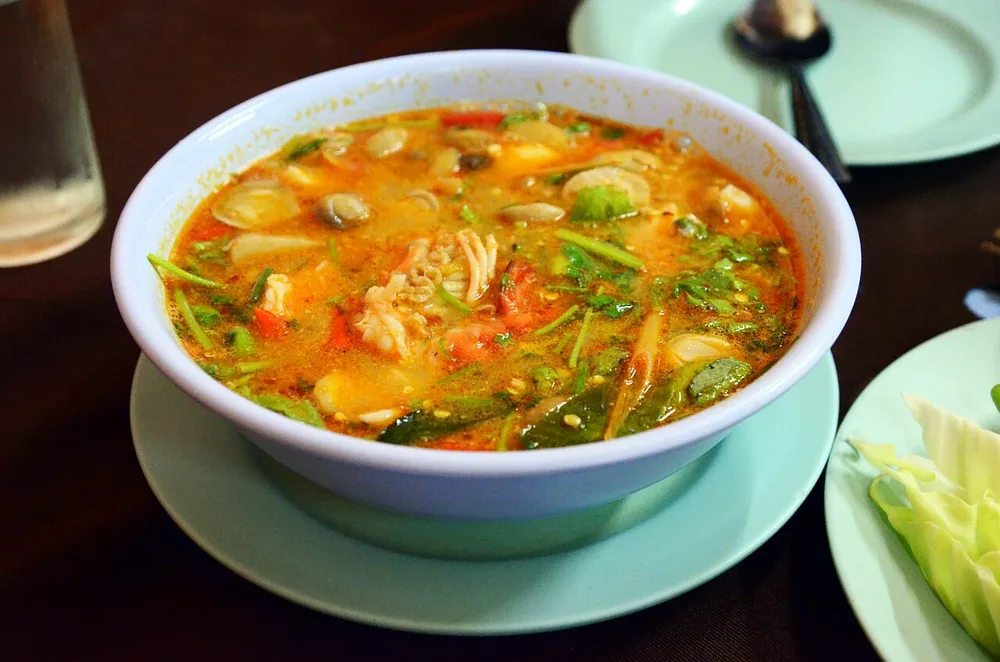
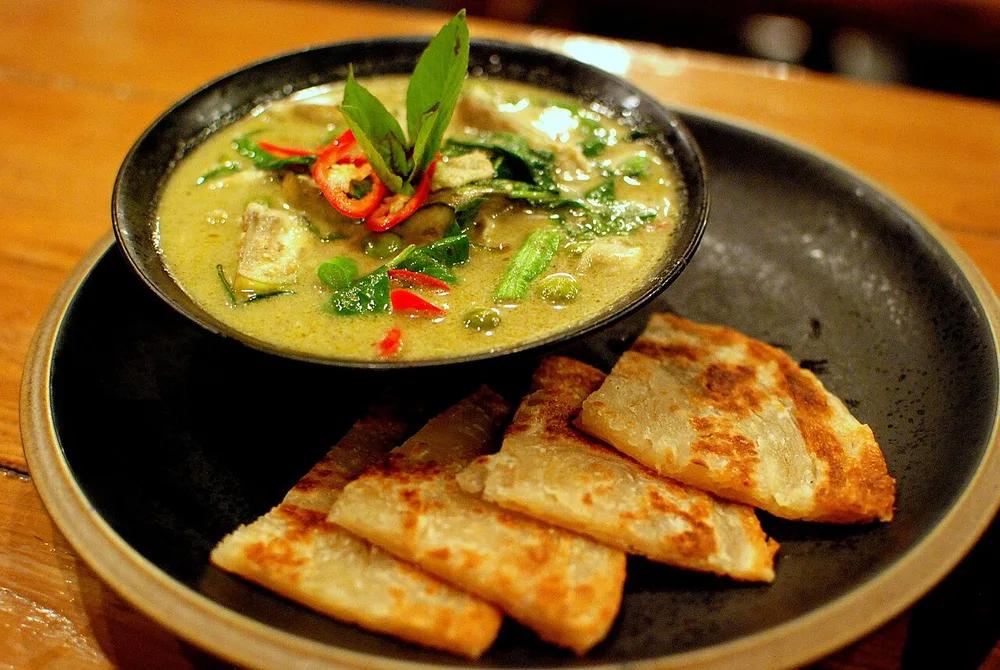
The four tastes
Lime and tamarind for sour, palm sugar for sweet, fish sauce for salty, chilli for heat. The condiments on every table let you adjust each one.
The dishes
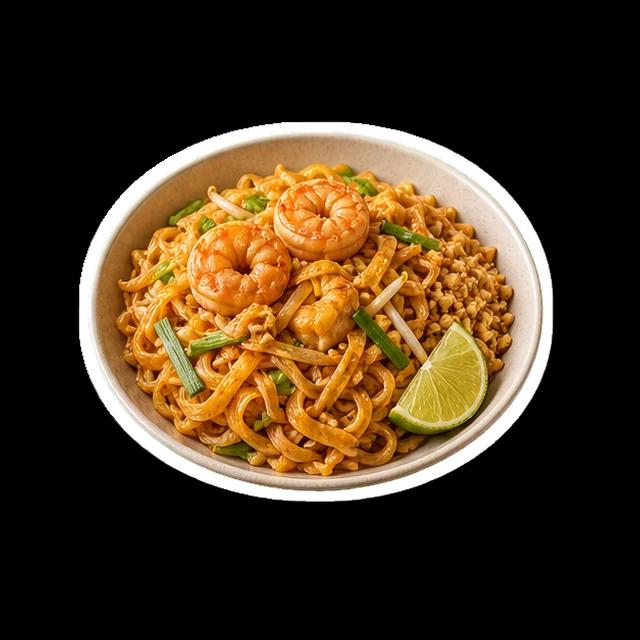
Photo: Takeaway, CC BY-SA 3.0 Pad thaiผัดไทย
History
Pad thai was created in the 1930s as part of Thai nation-building, and during the Second World War the government of Prime Minister Plaek Phibunsongkhram promoted rice noodles to reduce rice consumption. It has since become Thailand's most famous dish abroad.
How it is made
Soaked rice noodles are stir-fried in a wok with egg, tofu, shrimp, bean sprouts and garlic chives. The sauce balances tamarind, fish sauce and palm sugar, and it is finished with crushed peanuts.
How to eat it
Adjust the taste with lime, chili flakes and sugar at the table, and look for noodles that are chewy, not sticky.
Photo: Takeaway, CC BY-SA 3.0 Tom yum goongต้มยำกุ้ง
History
Tom yum is a hot and sour Thai soup, and the shrimp version, tom yum kung, is its best-known form. Before mass tourism, the fish version was the most widespread, as fresh fish was available almost everywhere.
How it is made
A broth is infused with lemongrass, galangal, kaffir lime leaves and crushed chilies, then cooked with shrimp and mushrooms. It is seasoned with fish sauce and lime juice, sometimes with chili paste and evaporated milk for a creamy version (nam khon).
How to eat it
The herbs are for flavour, not eating; eat it with rice and expect a hot, sour and salty balance.
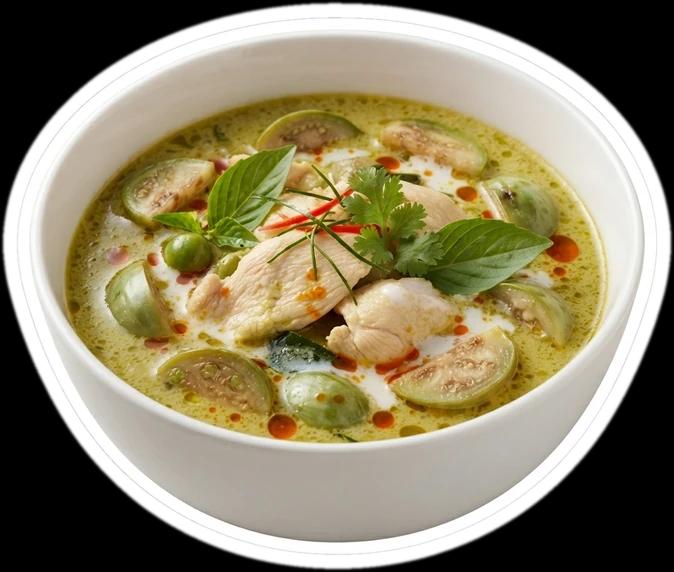
Photo: Takeaway, CC BY-SA 3.0 Green curryแกงเขียวหวาน
History
Thai green curry is a relatively recent dish, thought to have developed in central Thailand in the early 20th century. Its name means sweet green curry, referring to the colour, not sweetness.
How it is made
A paste of fresh green chilies, lemongrass, galangal, shrimp paste and spices is fried in coconut cream, then simmered with coconut milk and chicken or beef. Thai eggplants and sweet basil go in at the end.
How to eat it
Eat it with jasmine rice or rice noodles, and look for a sheen of coconut oil on top.
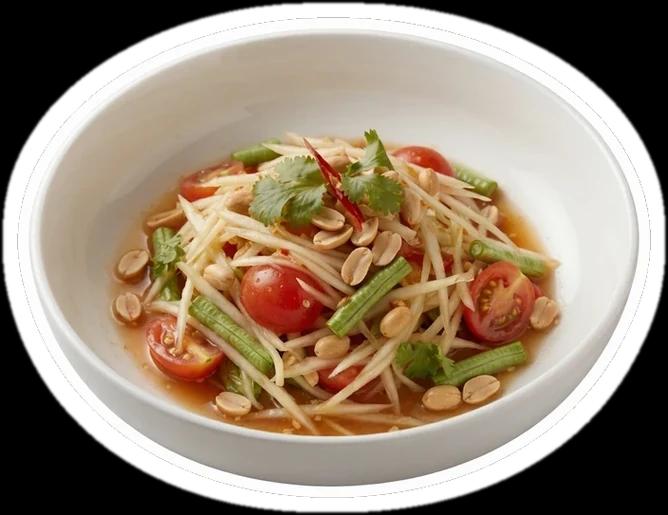
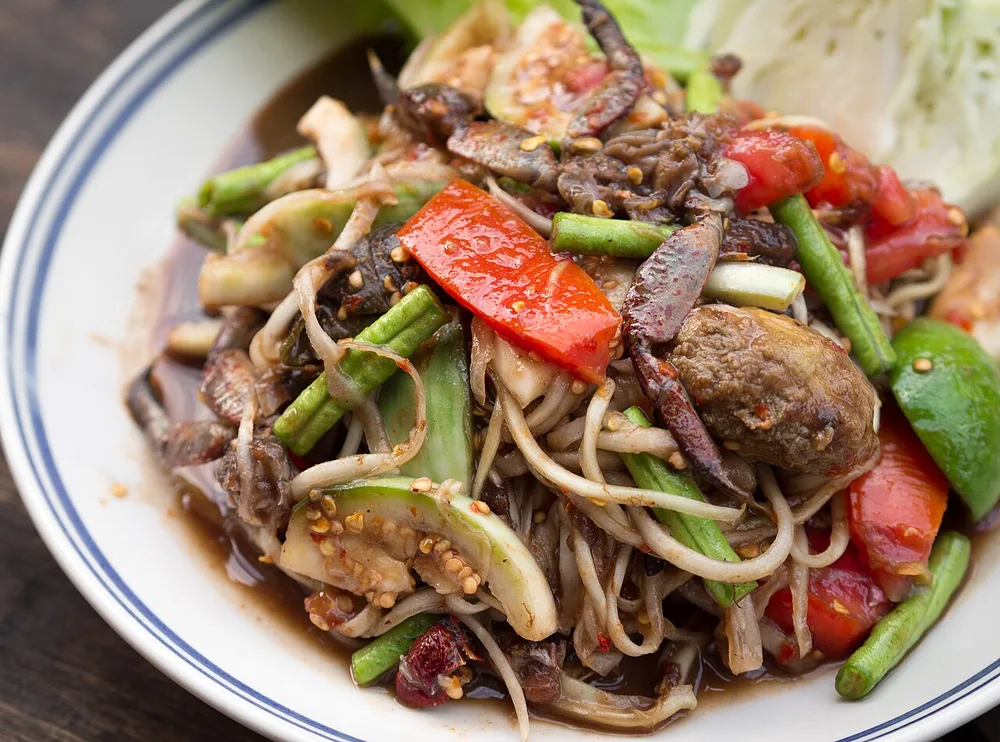
Photo: Takeaway, CC BY-SA 3.0 Som tamส้มตำ
History
Green papaya salad comes from the Lao cooking of Laos and Isan, and it spread across Thailand with migration from the northeast. Thai cooks have also created many regional versions.
How it is made
Shredded unripe papaya is pounded in a clay mortar with garlic, chilies, lime, fish sauce and palm sugar. Tomatoes, long beans, peanuts and dried shrimp are added, and Lao versions use fermented fish sauce.
How to eat it
Order it with sticky rice and grilled chicken, and say how many chilies you want.
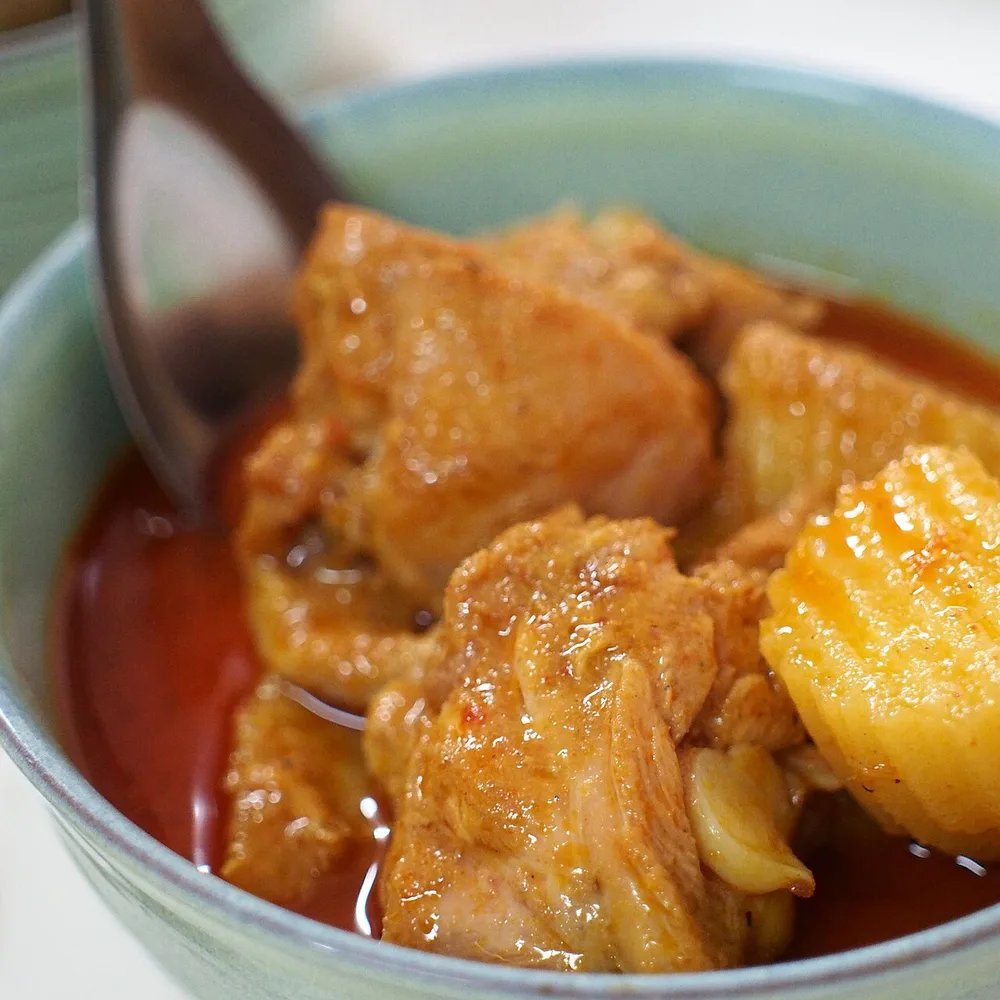
Photo: Takeaway, CC BY-SA 3.0 Massaman curryแกงมัสมั่น
History
Massaman curry shows Persian and Muslim influences, and it may date to the Ayutthaya kingdom's trade contacts of the 17th century. It appears in a poem attributed to King Rama II, and in 2011 a CNN reader poll named it the world's most delicious food.
How it is made
A curry paste with dried spices such as cardamom, cinnamon, cloves and nutmeg is cooked in coconut milk. Beef or chicken simmers with potatoes, onions and peanuts, sweetened with palm sugar and soured with tamarind.
How to eat it
It is mild, rich and slightly sweet, and is best eaten with plain rice.
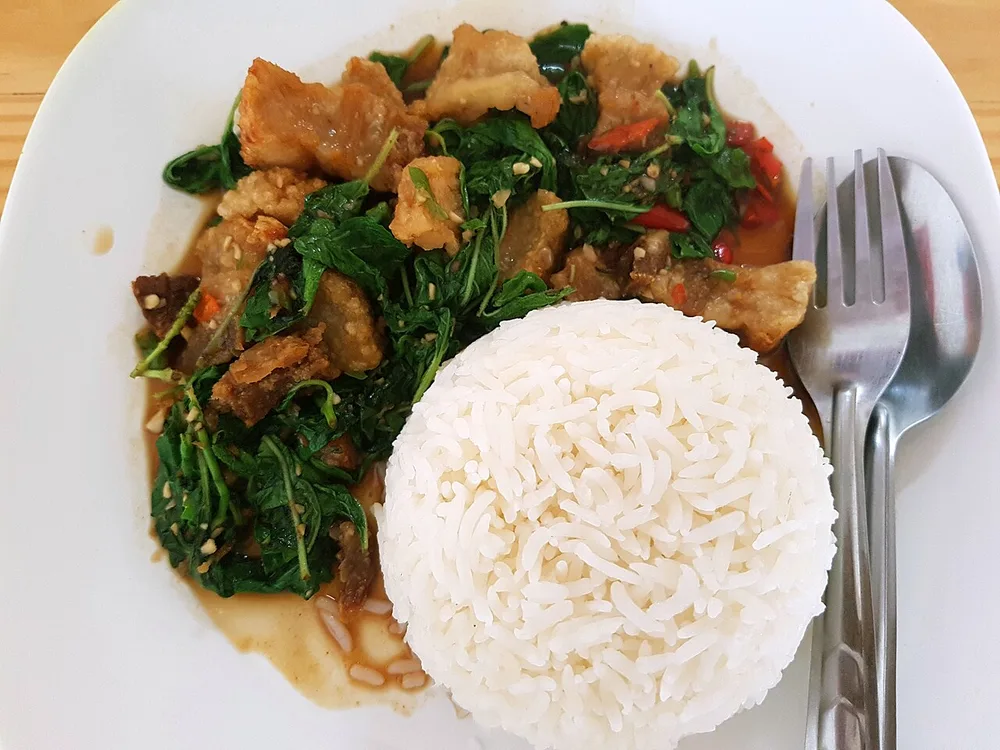
Photo: Iudexvivorum, CC0 Pad kra paoผัดกะเพรา
History
Pad kra pao, stir-fried holy basil, is a staple of Thai street stalls and is among the country's most common one-plate meals. It is often called the dish Thais order when they cannot decide.
How it is made
Minced pork or chicken is stir-fried in a very hot wok with garlic and chilies, seasoned with fish sauce, oyster sauce and soy, and finished with holy basil leaves. It is served over rice with a fried egg.
How to eat it
Ask for a crispy fried egg (khai dao) on top and break the yolk into the rice.
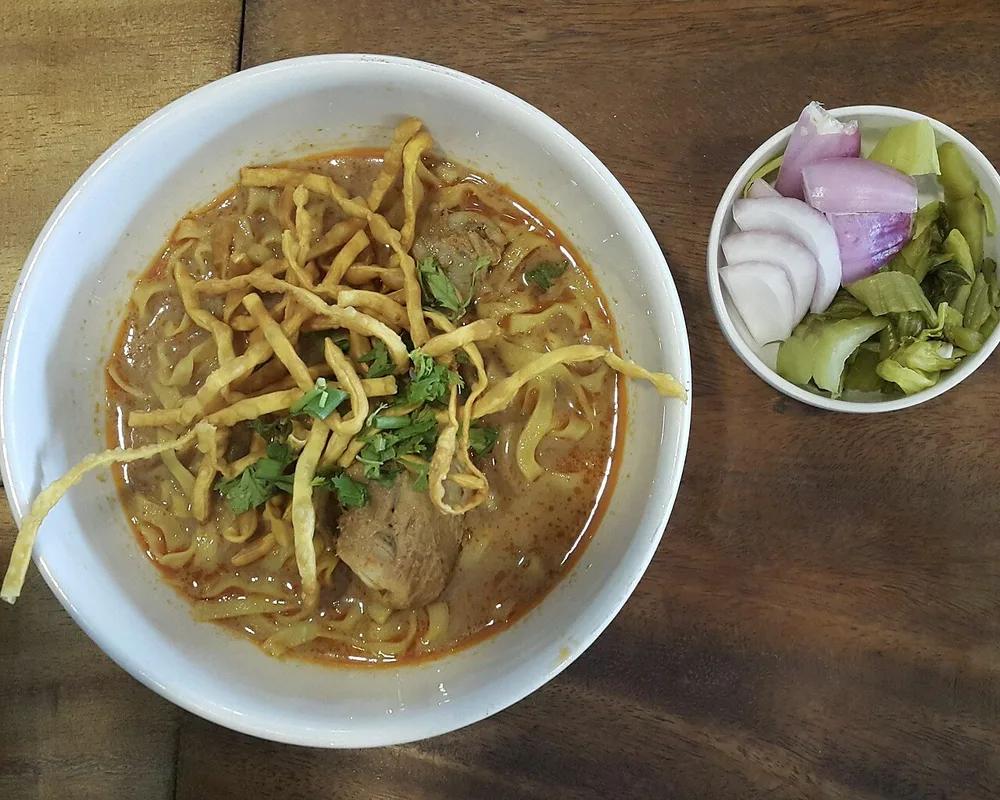
Photo: Chainwit., CC BY-SA 4.0 Khao soiข้าวซอย
History
Khao soi is associated with the Muslim Chinese (Chin Haw) traders from Yunnan who travelled through northern Thailand, Laos and Myanmar. It is now a signature dish of northern Thailand.
How it is made
Egg noodles are served in a curry broth of coconut milk with chicken or beef. Crispy fried noodles are piled on top, with pickled mustard greens, shallots and lime on the side.
How to eat it
Squeeze in the lime and add the pickles to cut the richness.
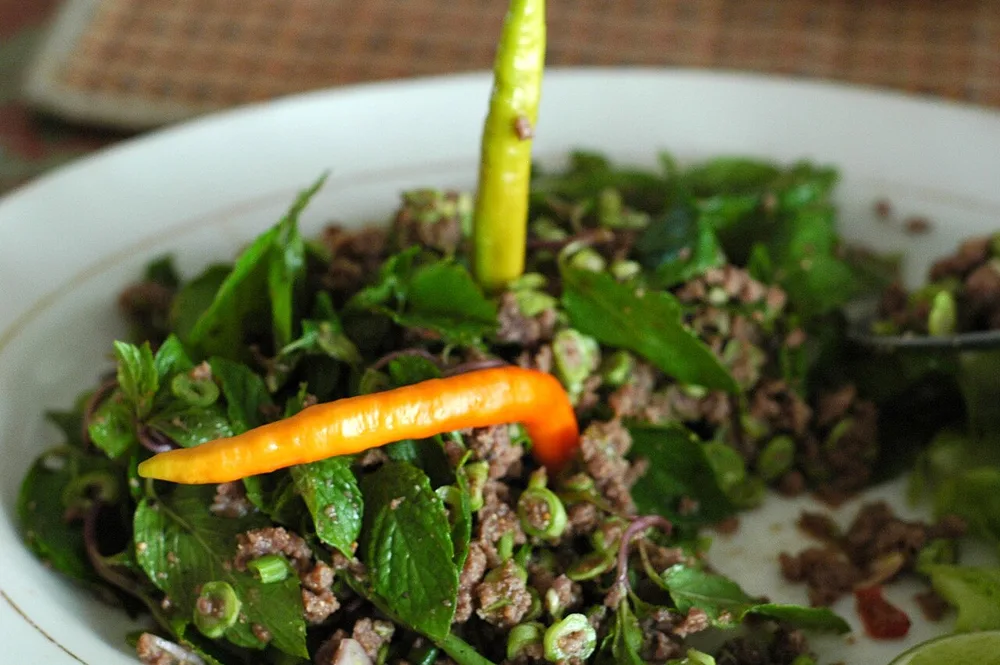
Photo: Jpatokal, CC BY-SA 4.0 Larbลาบ
History
Larb is a minced meat salad regarded as the national dish of Laos, and it is also a classic of northeastern Thailand. A northern Thai version uses dried spices instead of lime.
How it is made
Minced meat, often pork or chicken, is cooked and mixed with fish sauce, lime juice, chili, shallots and fresh herbs such as mint. Toasted ground sticky rice gives a nutty crunch.
How to eat it
Eat it with sticky rice and raw vegetables such as cabbage and long beans.
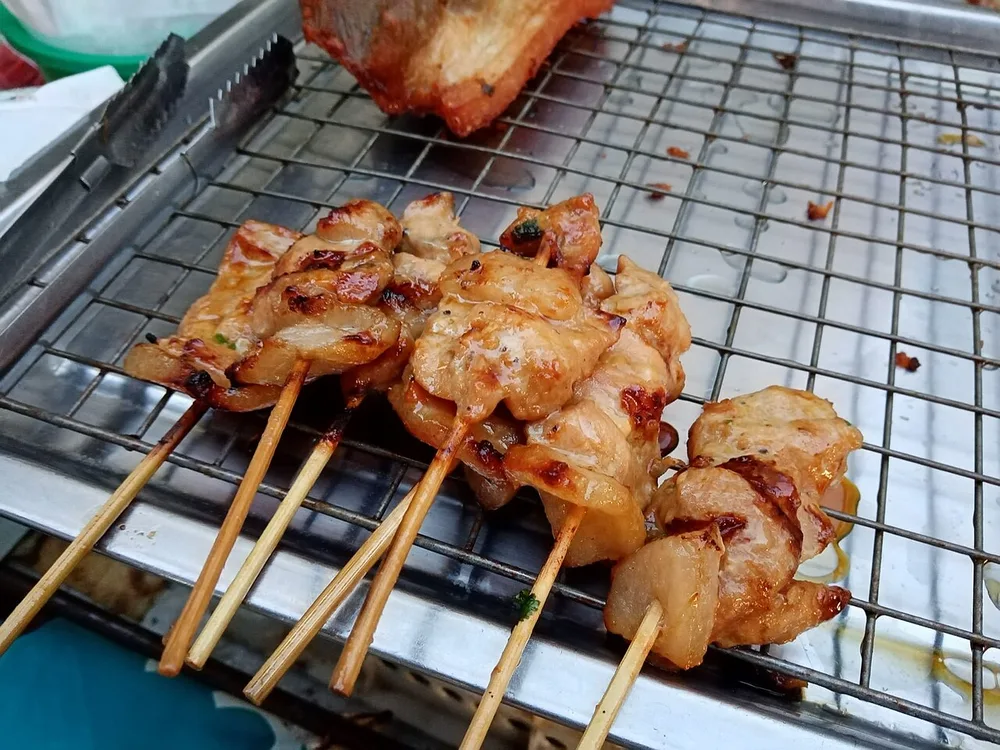
Photo: Phoebus 28, CC BY-SA 4.0 Moo pingหมูปิ้ง
History
Moo ping, grilled pork skewers, is one of Thailand's most common street foods, and is especially popular for breakfast. It is sold from charcoal grills on pavements in the morning.
How it is made
Thin slices of pork are marinated in garlic, coriander root, pepper, fish sauce, palm sugar and coconut milk. They are threaded on bamboo skewers and grilled slowly over charcoal, often brushed with coconut milk.
How to eat it
Buy a few skewers with a bag of sticky rice; good moo ping is sweet, smoky and slightly charred.
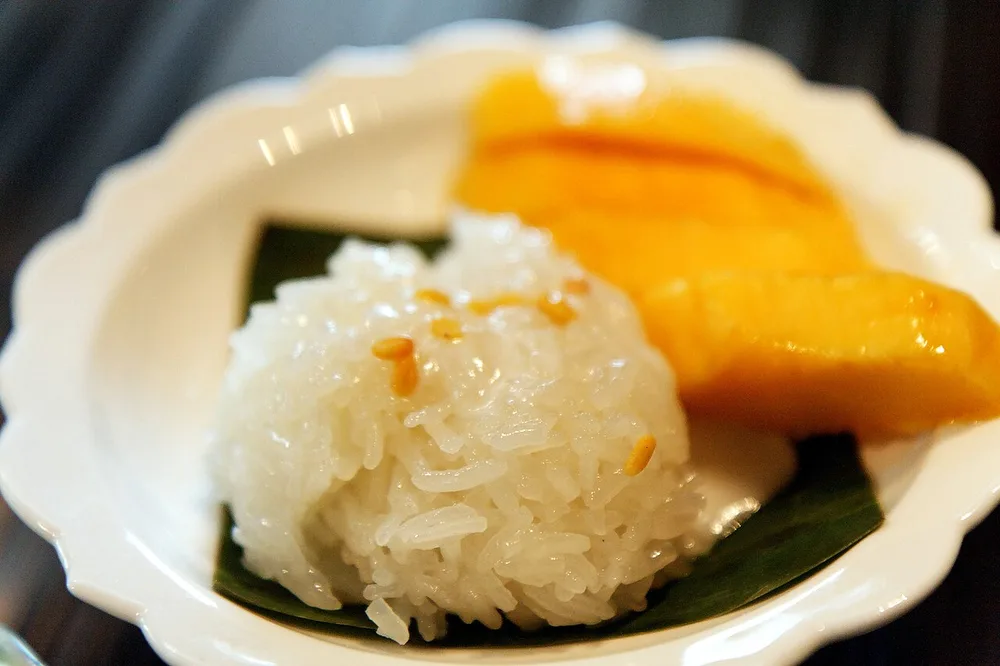
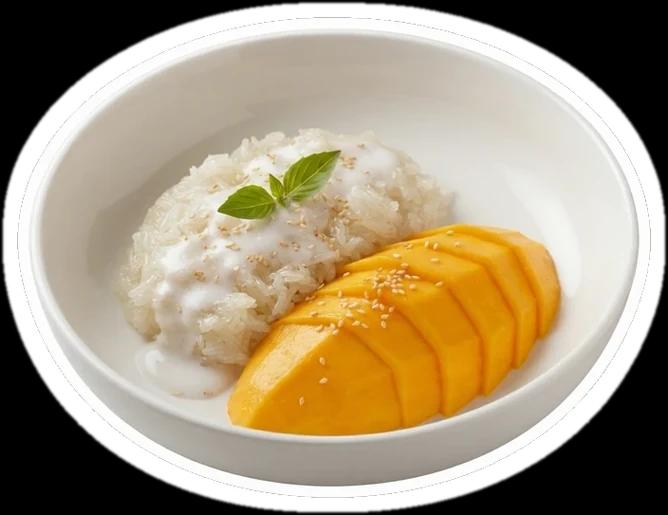
Photo: Dennis Wong from Hong Kong, Hong Kong, CC BY 2.0 Mango sticky riceข้าวเหนียวมะม่วง
History
Mango sticky rice is a classic Thai dessert eaten during the mango season in April and May. Versions of sticky rice with mango are also eaten elsewhere in Southeast Asia.
How it is made
Glutinous rice is steamed and soaked in sweetened, salted coconut milk. It is served with slices of ripe mango and topped with coconut cream and crispy mung beans.
How to eat it
It is best when mangoes are in season; look for fragrant, fully ripe yellow mango.
Questions
What is the most popular Thai dish?
Pad thai abroad, but in Thailand pad krapow, som tam and khao man gai are eaten more often.
Which Thai curry is the mildest?
Massaman curry, which is rich and slightly sweet. Green curry is usually the hottest of the coconut curries.
What is the difference between tom yum and tom kha?
Tom yum is a hot and sour clear soup; tom kha is milder and made with coconut milk and galangal.
Your next meal
is a collectible.
ate is out on Google Play. Snap your next plate and start the collection.
Get it on Google PlayFree · Android 8.0 or newer