
Georgian food: 10 dishes to know
Georgian food is built on walnuts, herbs, cheese and bread. These ten dishes are the ones to know, with where they come from, how they are made and how to eat them.
Walnuts, herbs and cheese
Ground walnuts thicken sauces and fill vegetables, fresh herbs go on everything, and cheese bread comes with almost every meal. Pomegranate and plum bring the sourness.
The dishes
Photo: Eugene Krasnaok, CC BY 4.0 Khachapuri (Adjarian)ხაჭაპური
History
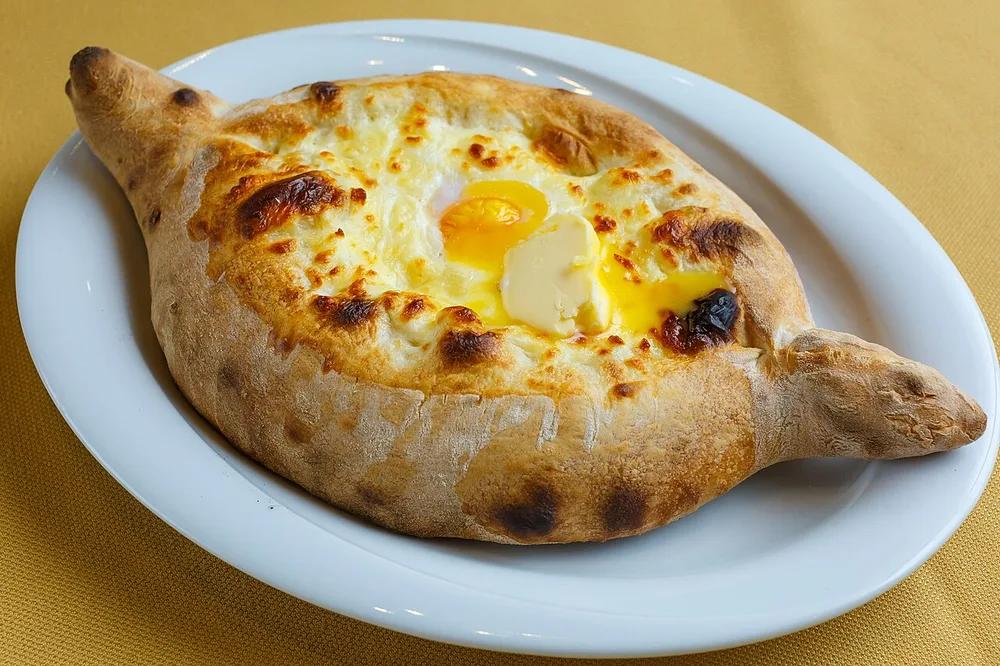
Khachapuri is Georgia's national cheese bread, with many regional styles. In 2019 it was granted the status of an intangible cultural heritage of Georgia.
How it is made
A yeast or soft dough is filled or topped with cheese such as imeruli and sulguni and baked. The Adjarian style is shaped into a boat and finished with a raw egg yolk and a knob of butter.
How to eat it
Stir the egg and butter into the cheese, then tear off pieces of the crust to dip.
Photo: Sandra C from Canada, CC BY-SA 2.0 Khinkaliხინკალი
History
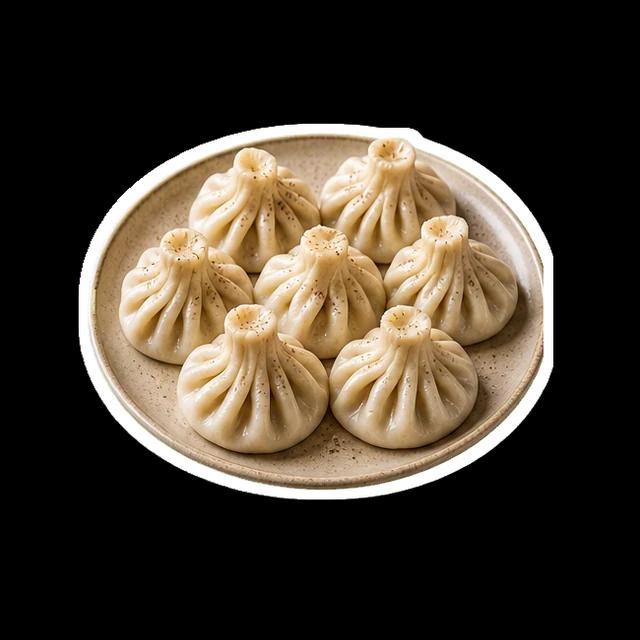
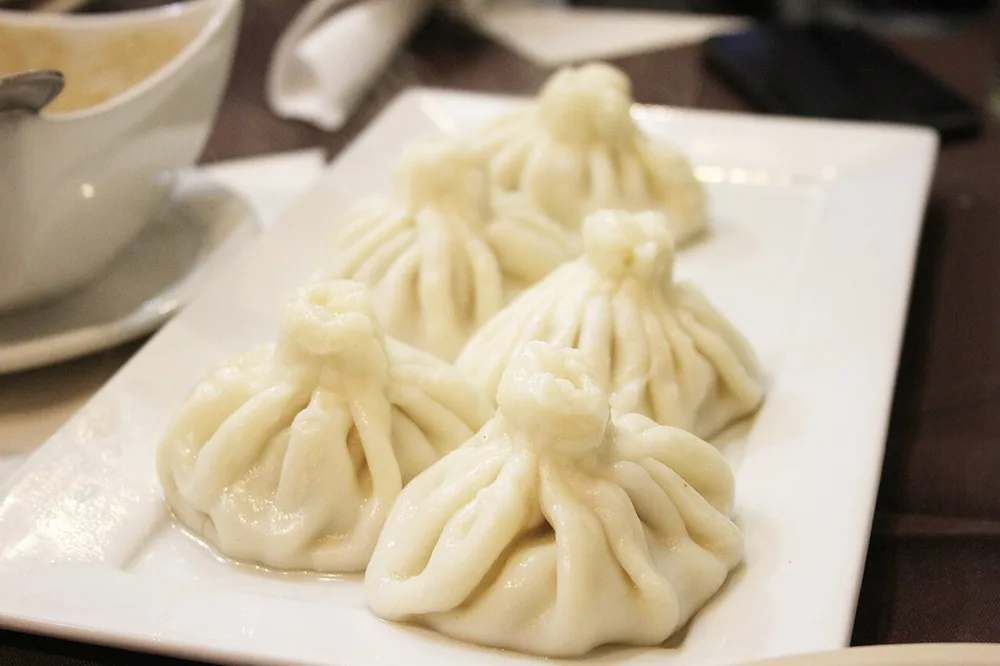
Khinkali came from the mountain regions of Pshavi, Mtiuleti and Khevsureti, and spread across Georgia. They are now among the country's best-known dishes.
How it is made
Unleavened dough is filled with spiced minced meat, onions and herbs. The dough is twisted into a knot at the top, and the dumplings are boiled until the filling releases its broth.
How to eat it
Hold it by the knot, bite a small hole and drink the broth first, then leave the knot on the plate.
Photo: Alandislands, CC BY-SA 4.0 Mtsvadiმწვადი
History
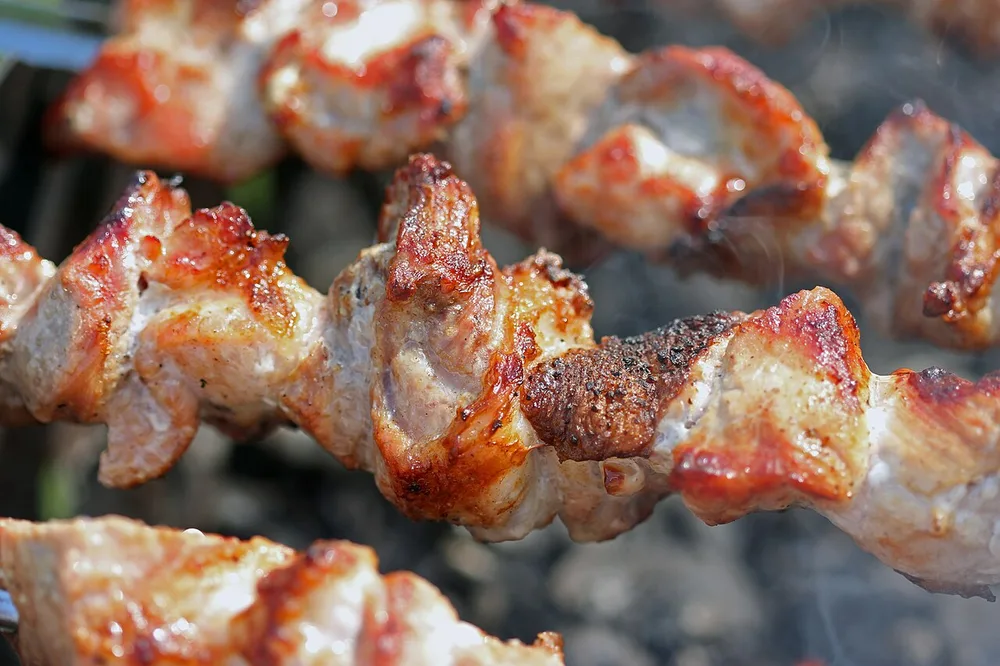
Mtsvadi, meaning meat cooked on fire, is Georgia's version of skewered grilled meat, known across the Caucasus as shashlik. It is a noted dish of Kakheti, the wine region.
How it is made
Chunks of pork, beef or lamb, sometimes marinated with onions and spices, are threaded on skewers. They are grilled over hot coals.
How to eat it
Eat it with raw onion, pomegranate seeds and tkemali plum sauce.
Photo: Georgian Recipes at Georgia About, CC BY 3.0 Pkhaliფხალი
History
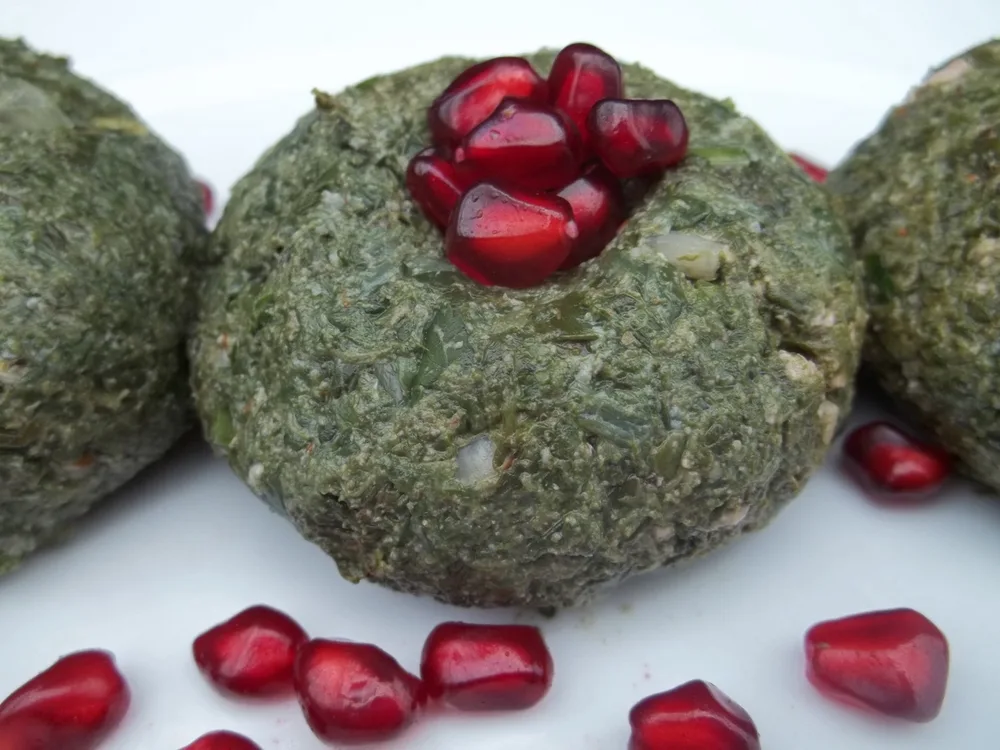
Pkhali is a traditional Georgian dish made of chopped vegetables and walnuts, served as a cold appetiser. Many regional versions exist, using spinach, beets, cabbage or beans.
How it is made
Cooked vegetables are finely chopped and mixed with ground walnuts, garlic, vinegar and fresh herbs. The paste is formed into balls and garnished with pomegranate seeds.
How to eat it
A cold starter for spreading on bread; look for distinct colours from the different vegetables.
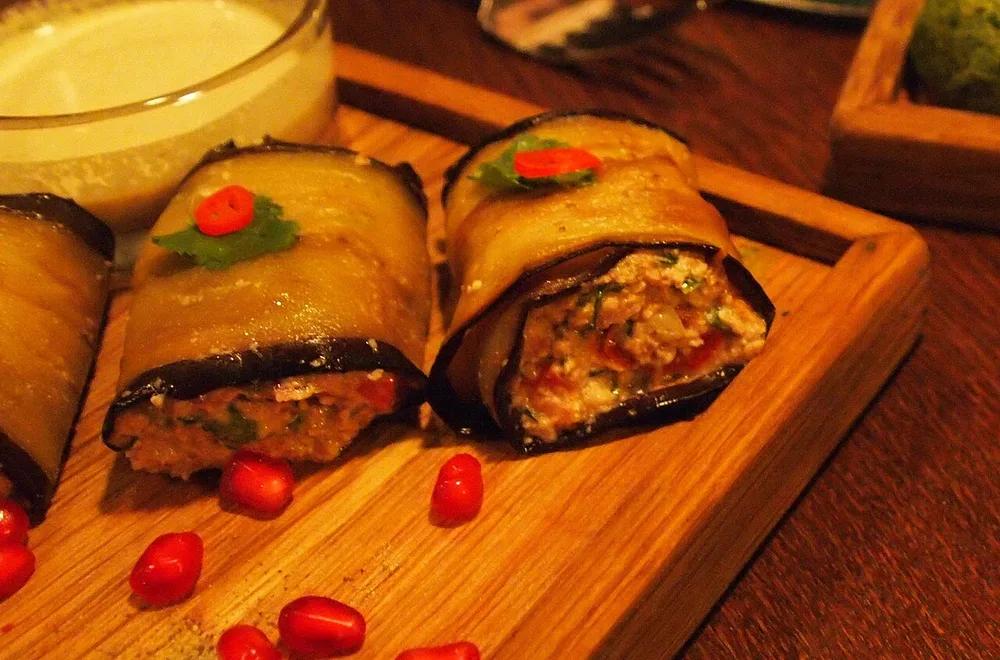
Photo: salvagekat, CC BY-SA 2.0 Badrijani nigvzitბადრიჯანი ნიგვზით
History
Badrijani nigvzit means eggplant with walnuts and is a classic Georgian dish. It shows the central role of walnut paste in Georgian cooking.
How it is made
Slices of eggplant are fried and then rolled around a filling of ground walnuts, garlic, herbs and spices such as blue fenugreek. They are topped with pomegranate seeds.
How to eat it
Eat them cold as a starter, and look for soft eggplant and a creamy walnut filling.
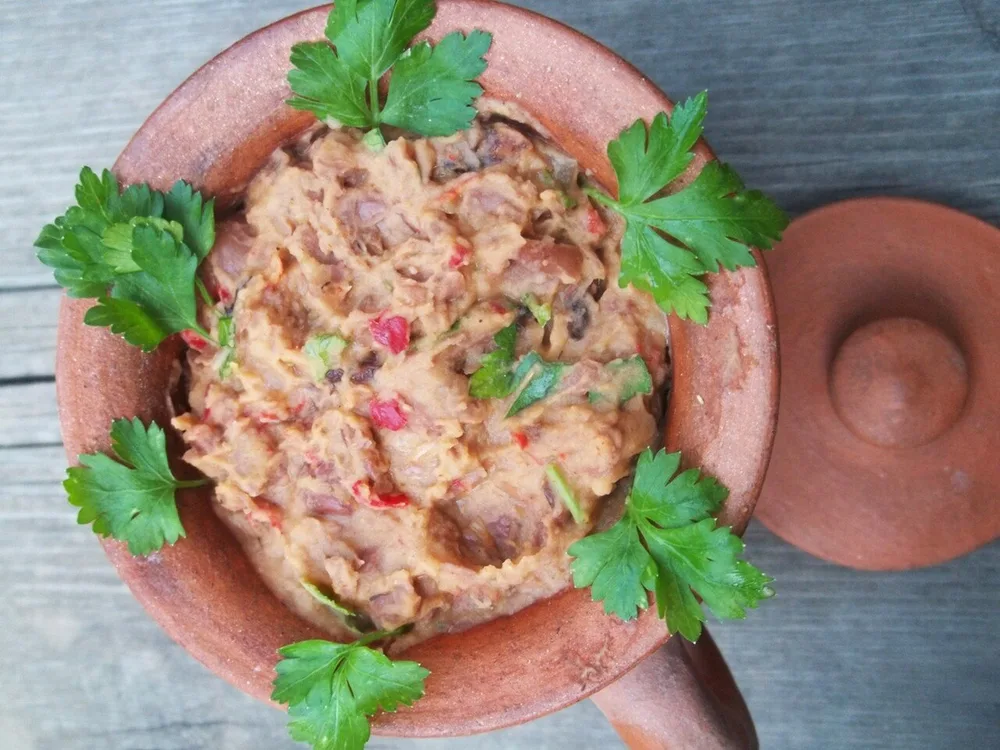
Photo: Georgian Recipes at Georgia About, CC BY 3.0 Lobioლობიო
History
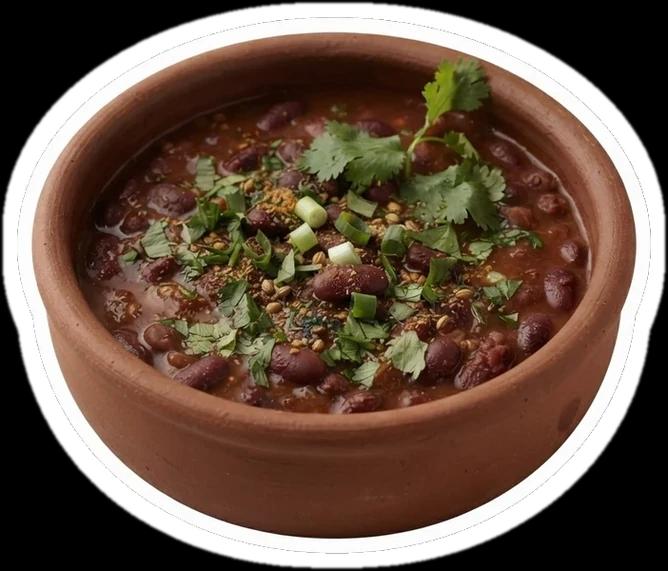
Lobio means beans in Georgian and refers to a family of bean dishes. The version cooked in a clay pot is one of the most common Georgian dishes.
How it is made
Kidney beans are cooked with onions, garlic, coriander, savoury and spices, and sometimes walnuts. It is often served hot in a clay pot (kotani).
How to eat it
Eat it with mchadi cornbread and pickled vegetables.
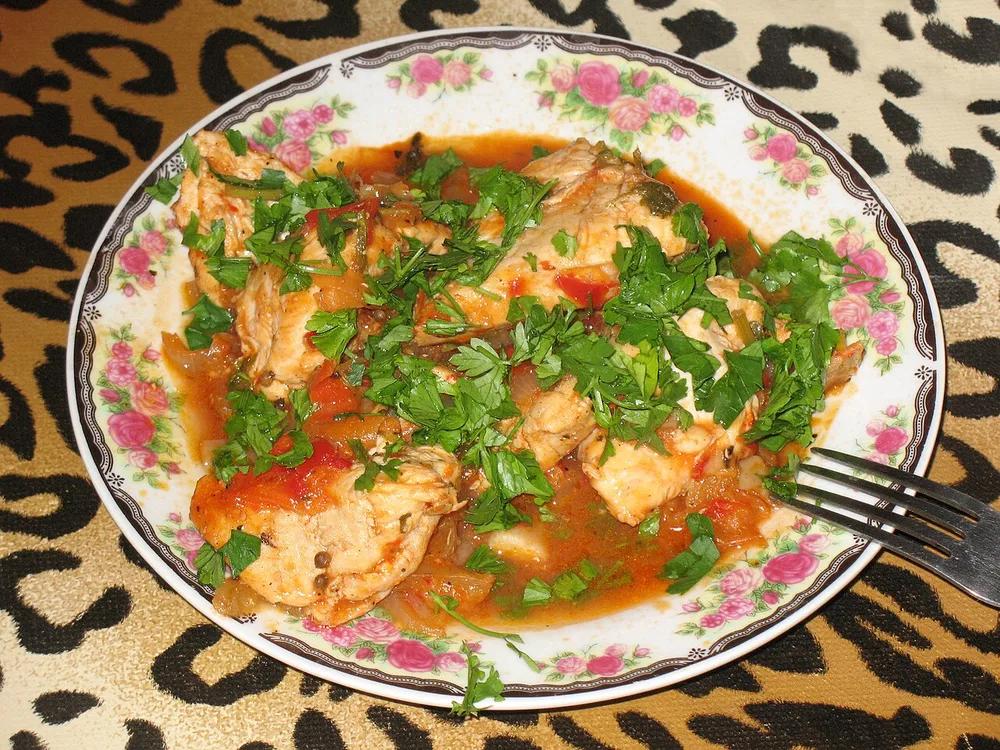
Photo: Victor Vizu, CC BY-SA 3.0 Chakhokhbiliჩახოხბილი
History
Chakhokhbili takes its name from the Georgian word for pheasant, the bird it was originally made from. Today it is usually made with chicken.
How it is made
Chicken pieces are browned and stewed with plenty of onions and tomatoes, garlic and spices. Fresh herbs such as coriander, basil and dill are added at the end.
How to eat it
Mop up the sauce with fresh bread.
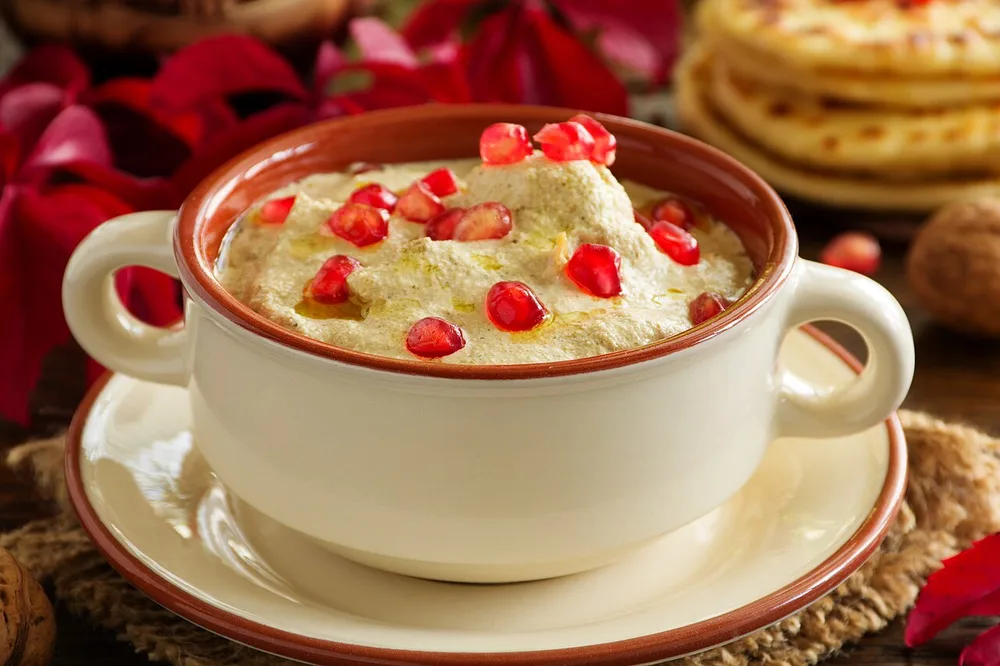
Photo: Lesya Dolyk, CC BY-SA 2.0 Satsiviსაცივი
History
Satsivi means cold dish, and it is a Georgian walnut sauce served with poultry, especially on holidays. It is one of the most festive dishes on the Georgian table.
How it is made
Poached chicken or turkey is served in a thick sauce of ground walnuts, garlic, broth and spices such as blue fenugreek and marigold. It is chilled before serving.
How to eat it
Eat it cold with bread or mchadi, and look for a smooth, pale sauce.
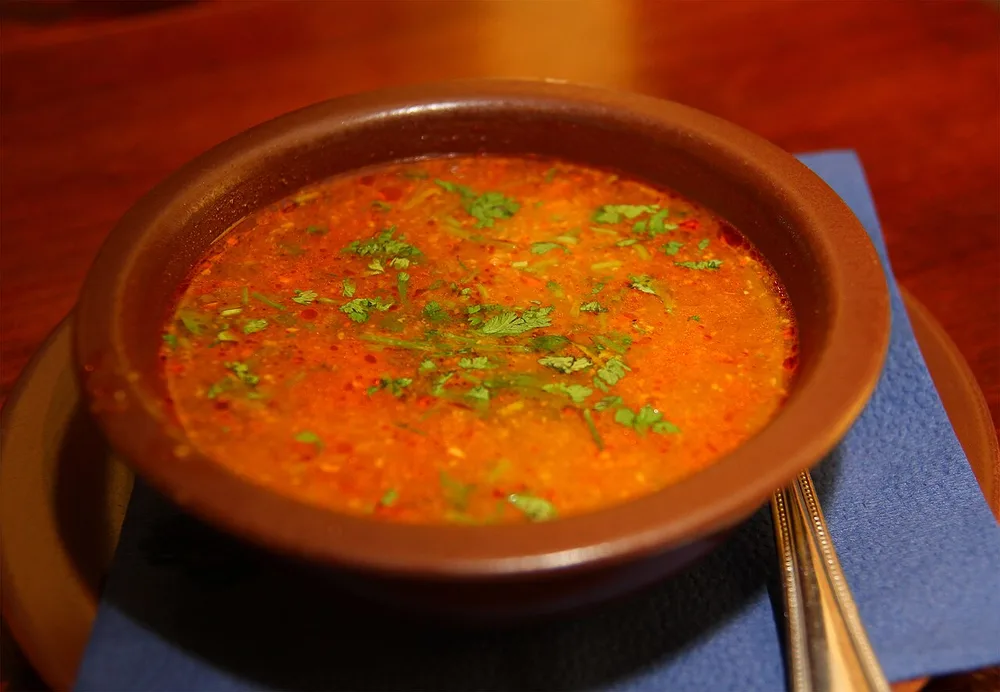
Photo: A.Savin, CC BY-SA 3.0 Kharchoხარჩო
History
Kharcho is a traditional Georgian soup from the western region of Megrelia. Its classic version uses beef.
How it is made
Beef is simmered with rice and then flavoured with a sour paste from tkemali plums, ground walnuts, garlic and spices. Fresh herbs go in at the end.
How to eat it
It is thick, sour and nutty, and is best eaten with bread.
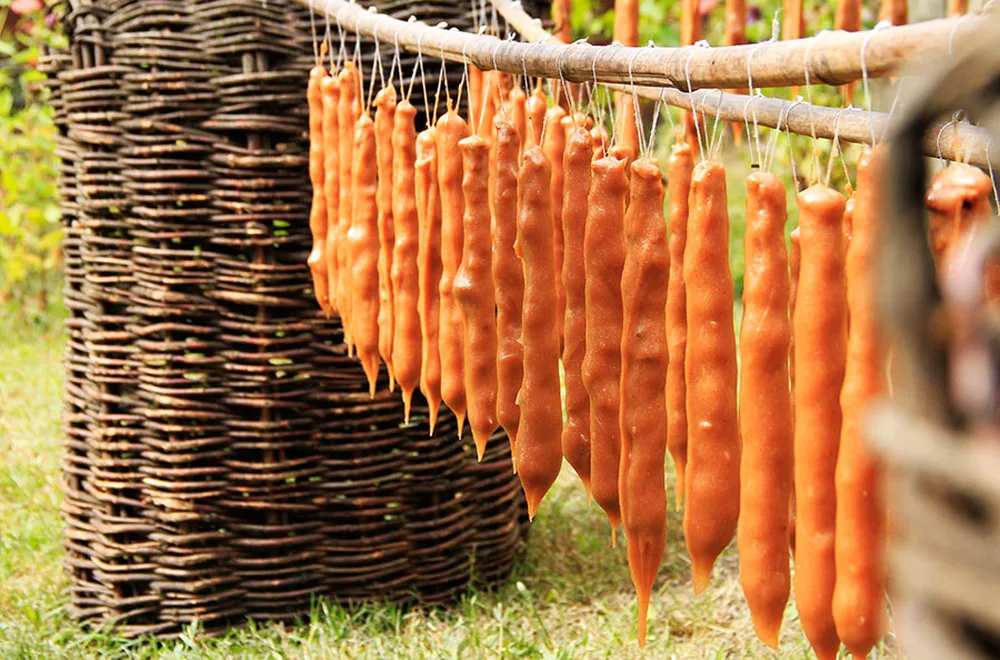
Photo: Levan Gokadze (uploaded by Giorgi Balakhadze), CC BY-SA 2.0 Churchkhelaჩურჩხელა
History
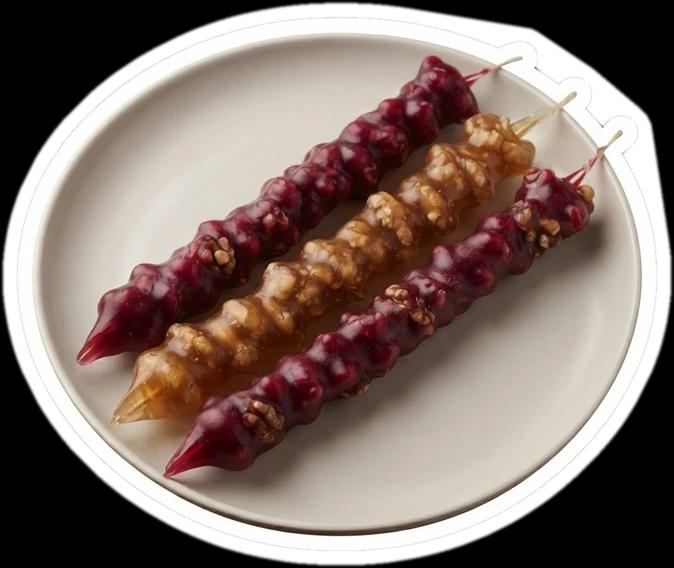
Churchkhela is a traditional sausage-shaped sweet made in Georgia, often during the grape harvest (rtveli). It was valued as long-lasting food that warriors could carry.
How it is made
Walnuts or hazelnuts are threaded on a string and dipped repeatedly in thickened grape must (tatara) mixed with flour. The strings are then hung to dry for several days.
How to eat it
Buy it from markets and street stalls; good churchkhela is soft and chewy with plenty of nuts.
Questions
What is Georgian food like?
Rich and herby: walnuts, coriander, garlic, cheese and bread, with sour notes from pomegranate and plums. It sits between Eastern Europe and the Middle East.
What should I order at a Georgian restaurant?
Khinkali, a khachapuri to share, pkhali and badrijani to start, and mtsvadi or chakapuli as a main.
What is the difference between khachapuri types?
Adjarian is boat-shaped with an egg on top, Imeruli is a round cheese-filled bread, and Megruli has extra cheese on top.


Your next meal
is a collectible.
ate is out on Google Play. Snap your next plate and start the collection.
Get it on Google PlayFree · Android 8.0 or newer