
Italian food: 10 dishes to know
Italian food is really twenty regional cuisines. These ten dishes are the ones every Italian would recognise, with the region each comes from and how it is made.
Regional, not national
Pesto is from Liguria, carbonara from Rome, risotto from the north and cannoli from Sicily. Knowing where a dish comes from is the quickest way to find the best version of it.
The dishes
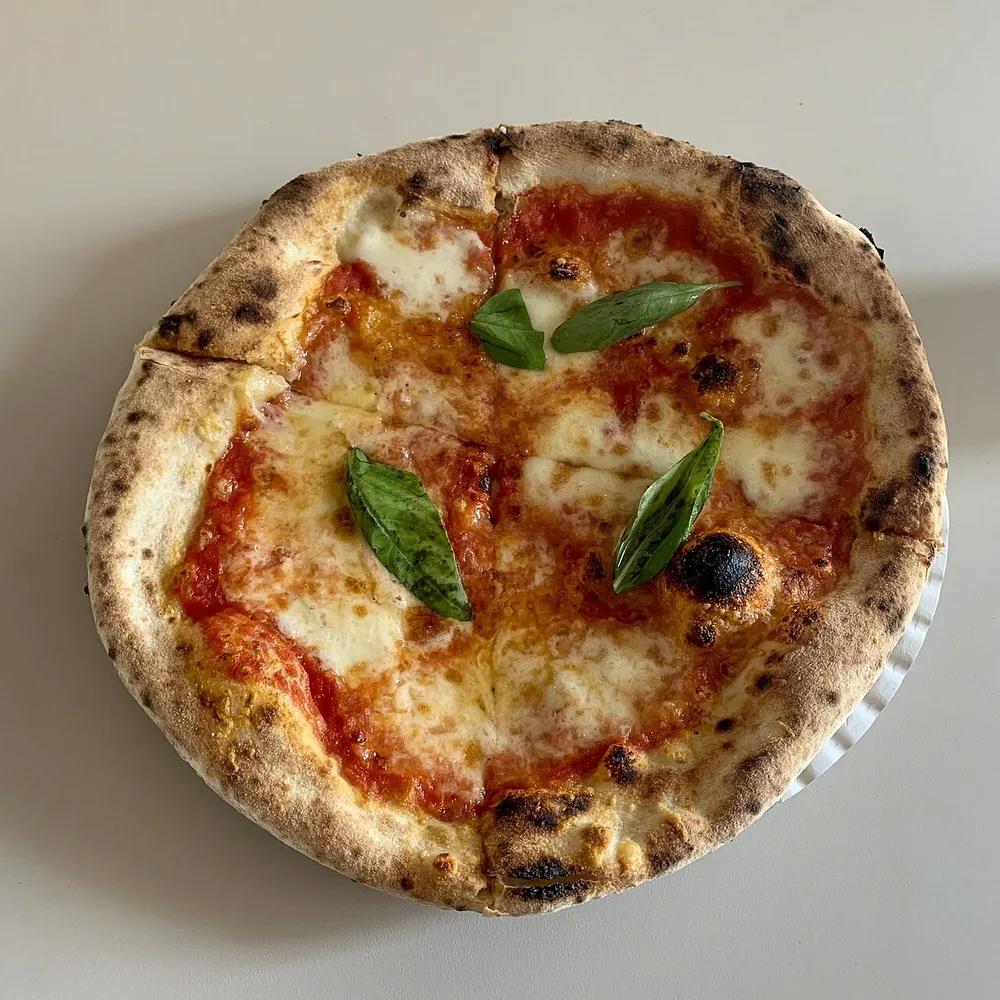
Photo: Bex Walton from London, England, CC BY 2.0 Pizza napoletanaPizza napoletana
History
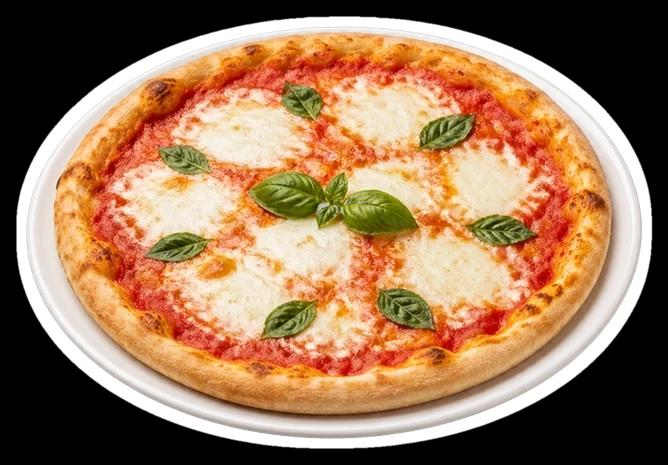
Flatbreads topped with tomato became a cheap street food in Naples in the 18th and 19th centuries. A popular legend says pizzaiolo Raffaele Esposito made the Margherita for Queen Margherita in 1889, and the art of the Neapolitan pizzaiolo is on UNESCO's list of intangible cultural heritage.
How it is made
A soft dough of wheat flour, water, salt and yeast is left to rise for many hours, then stretched by hand. It is topped with San Marzano tomatoes, mozzarella or fior di latte, basil and olive oil and baked for about 90 seconds in a wood-fired oven at around 485 C.
How to eat it
Look for a puffy, leopard-spotted rim and a soft, slightly wet centre, and eat it with knife and fork or folded.
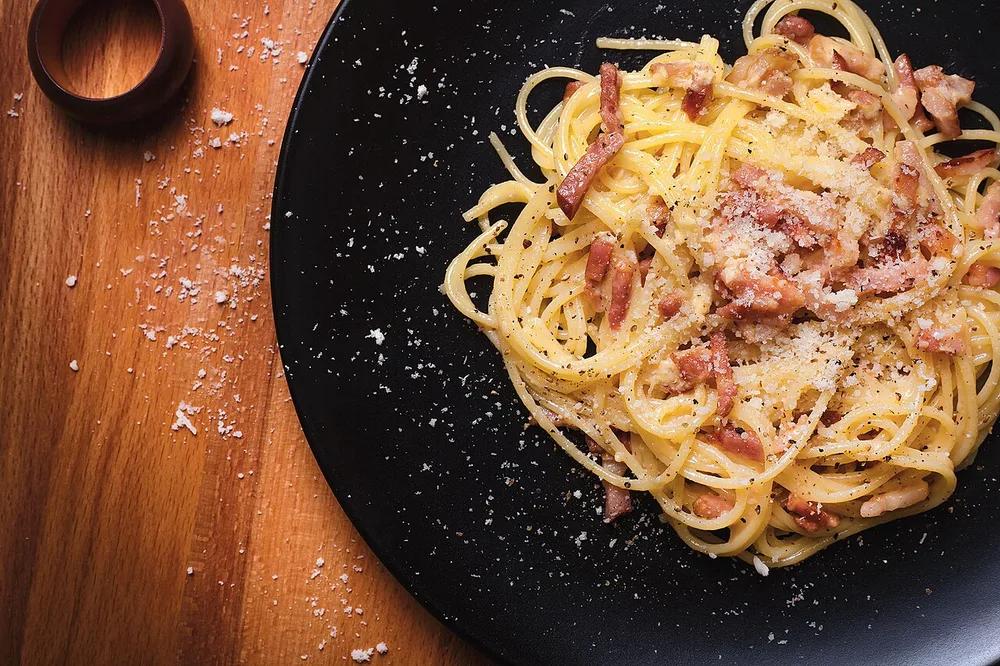
Photo: Javier Somoza, CC BY-SA 4.0 Spaghetti alla carbonaraSpaghetti alla carbonara
History
Carbonara is a young dish: it first appears in print around 1950, and its origins in Rome after the Second World War are still debated. One popular theory links it to American soldiers' rations of bacon and powdered egg.
How it is made
Spaghetti or rigatoni is tossed with crisp-fried guanciale (cured pork cheek), then mixed off the heat with egg yolks, grated pecorino romano and lots of black pepper. The heat of the pasta turns the egg into a creamy sauce without scrambling it.
How to eat it
A true Roman carbonara has no cream; the sauce should be glossy and cling to every strand.
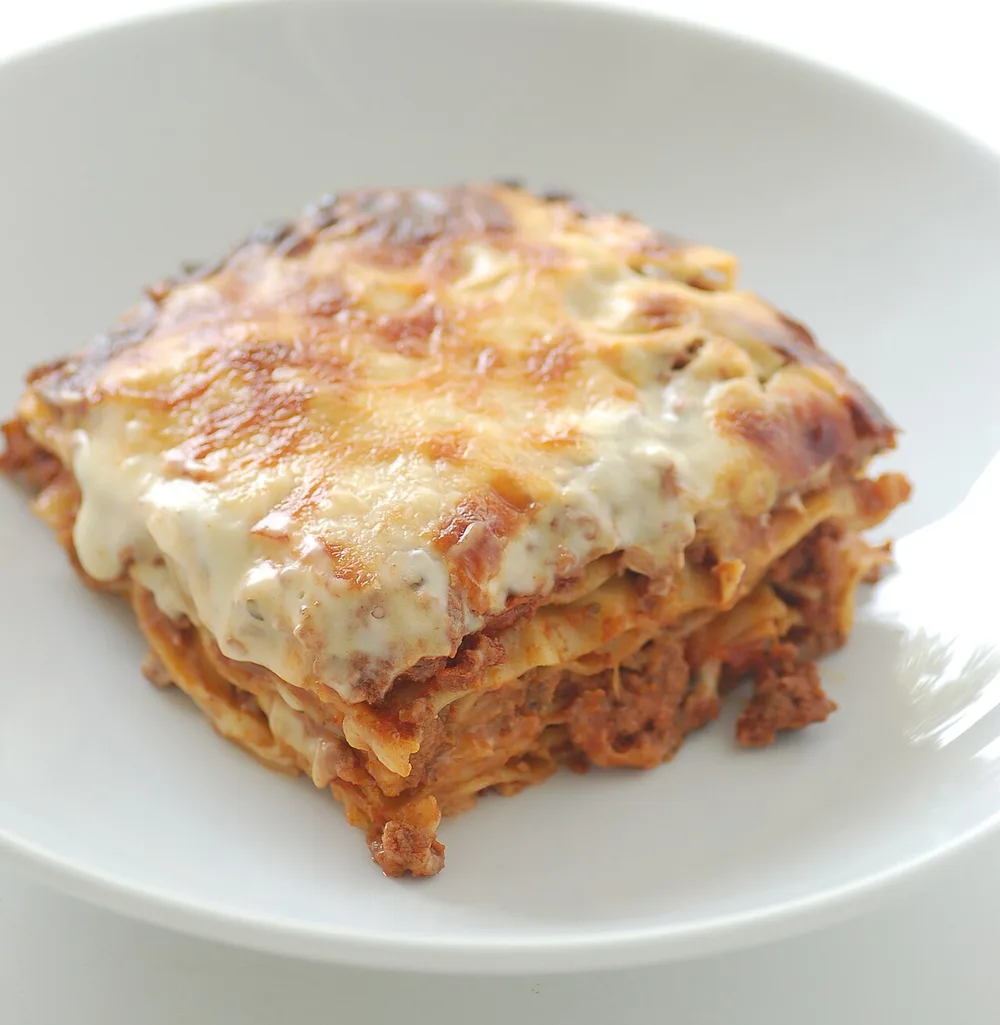
Photo: jules / stonesoup, CC BY 2.0 Lasagne alla bologneseLasagne alla bolognese
History
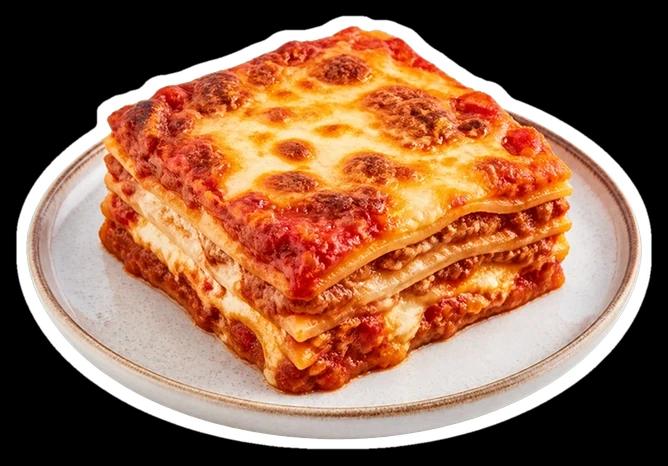
Lasagne is one of the oldest pasta types, with a recipe for layered sheets appearing in the 14th-century Liber de Coquina. The baked version with ragu and bechamel is most closely tied to Bologna and Emilia-Romagna.
How it is made
Sheets of egg pasta, often green with spinach in Bologna, are layered with slow-cooked meat ragu, bechamel sauce and grated Parmigiano Reggiano. It is baked until the top is bubbling and browned.
How to eat it
Let it rest a few minutes before cutting so the layers hold, and look for crisp edges at the corners.
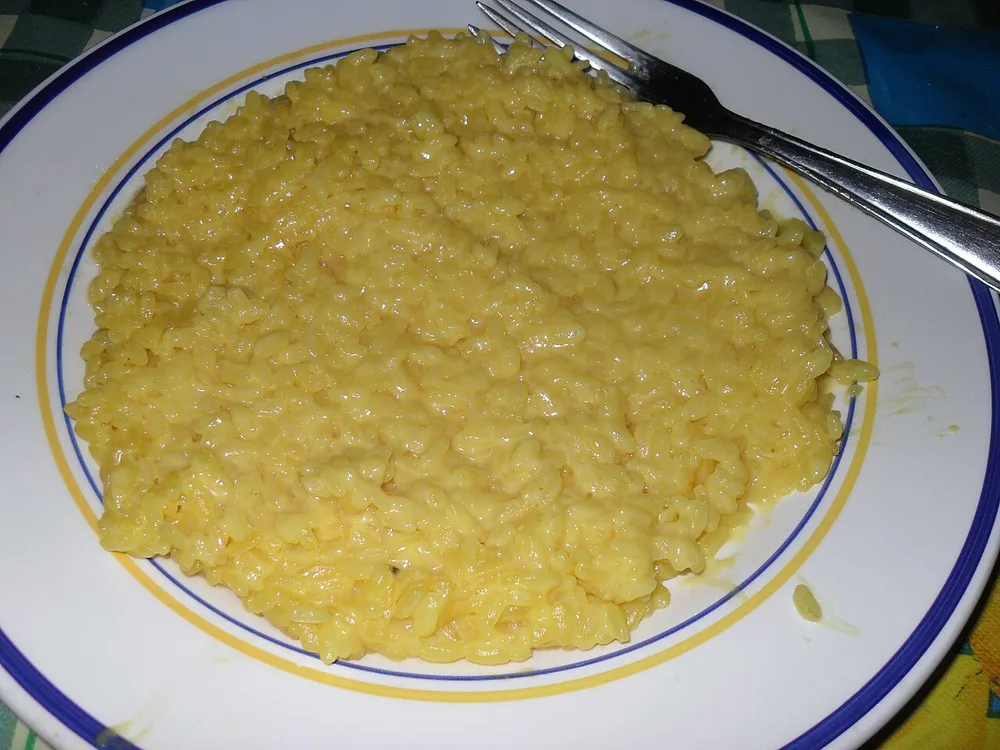
Photo: Number55, CC BY-SA 3.0 Risotto alla milaneseRisotto alla milanese
History
Risotto alla milanese is the signature rice dish of Milan, coloured golden by saffron. It is the traditional partner of ossobuco.
How it is made
Carnaroli or arborio rice is toasted in butter with onion, then cooked by adding hot beef broth a ladle at a time while stirring. Saffron is added during cooking, and it is finished with butter and Grana Padano or Parmigiano.
How to eat it
It should flow gently on the plate (all'onda), never stiff or mushy.
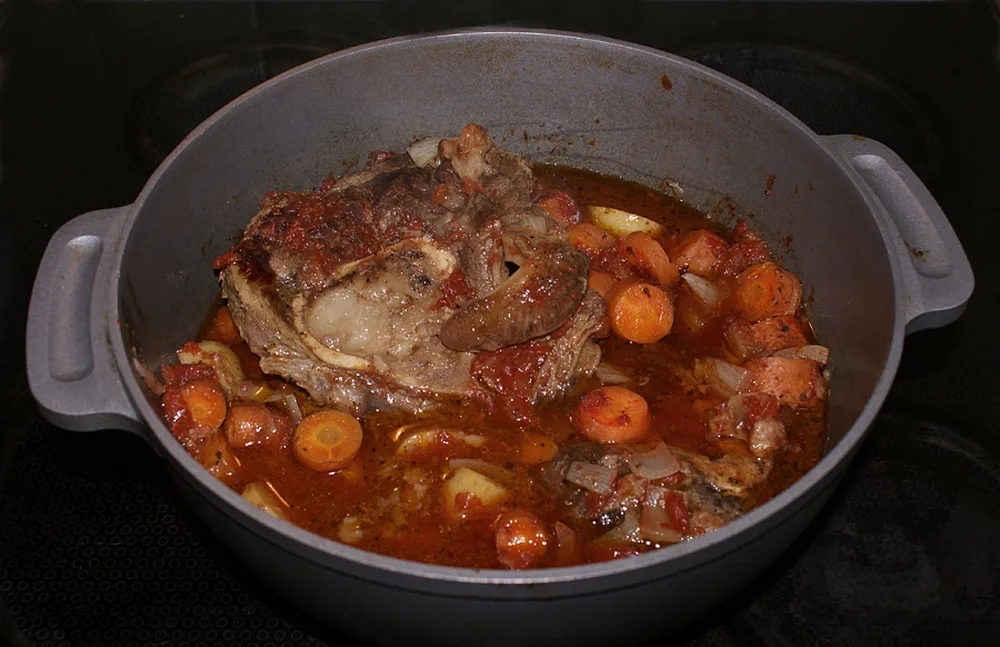
Photo: Mogens Engelund, CC BY-SA 3.0 Ossobuco alla milaneseOssobuco alla milanese
History
Ossobuco, meaning bone with a hole, is a Milanese specialty of the 19th century. The older version is cooked without tomato and finished with gremolata.
How it is made
Cross-cut veal shanks with the marrow bone are floured, browned and braised slowly in white wine, broth and aromatic vegetables until very tender. A gremolata of lemon zest, garlic and parsley is scattered on top.
How to eat it
Scoop out the marrow from the bone, it is the prize, and eat it with risotto alla milanese.
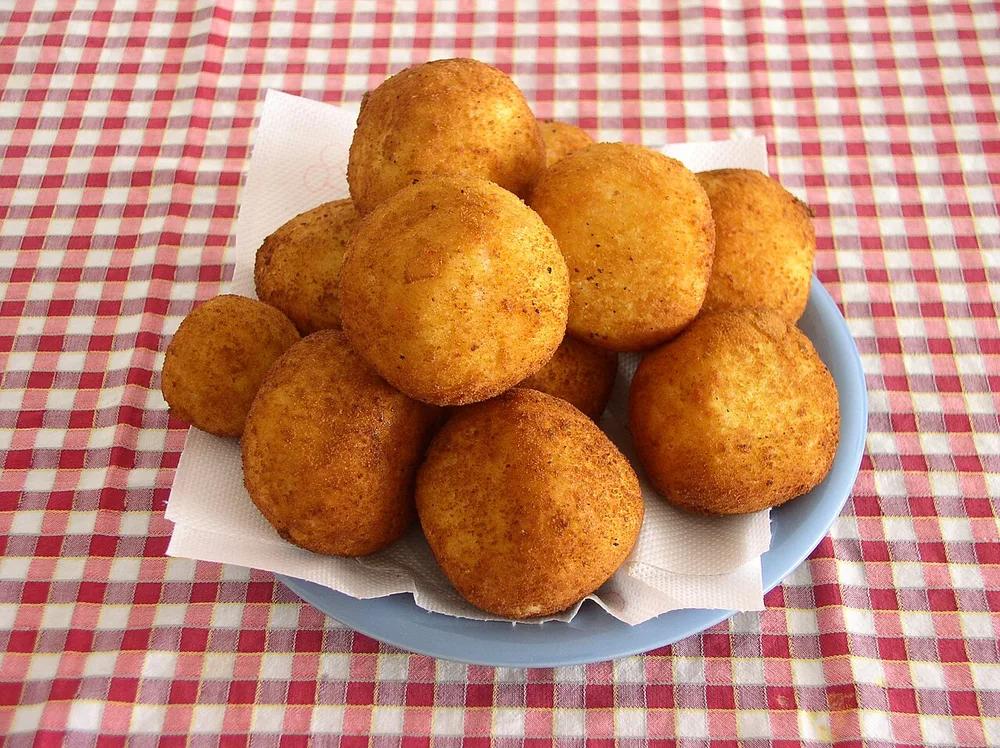
Photo: No machine-readable author provided. Gmelfi assumed (based on copyright claims)., Public domain AranciniArancini / Arancine
History
Sicilian tradition traces arancini to the Arab rule of the island in the 10th century, when rice and saffron were introduced. The name means little oranges, and Palermo (arancina, round) and Catania (arancino, cone-shaped) still argue over both name and shape.
How it is made
Saffron risotto is cooled, shaped around a filling such as ragu with peas or ham and mozzarella, then coated in breadcrumbs. The balls are deep-fried until golden.
How to eat it
A classic Sicilian street food from bars and rosticcerie; look for a crisp shell and a molten centre.
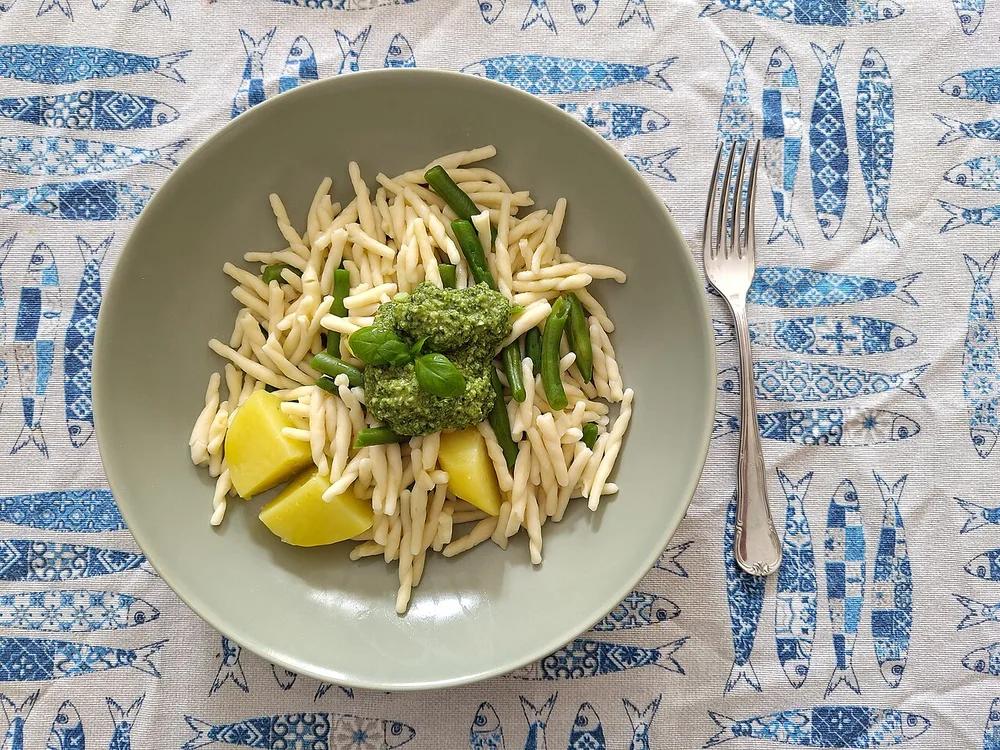
Photo: Eluinie, CC BY-SA 4.0 Pesto alla genovesePesto alla genovese
History
Pesto takes its name from the Genoese verb for pounding, and a recipe close to today's version appears in Giovanni Battista Ratto's La Cuciniera genovese of 1863. Ligurian cooks use small-leaved basil grown near Genoa, which has PDO status.
How it is made
Basil leaves are pounded in a marble mortar with garlic, coarse salt and pine nuts, then mixed with Parmigiano and pecorino and loosened with Ligurian olive oil. It is traditionally tossed with trofie or trenette, often with potatoes and green beans.
How to eat it
Real pesto is bright green and served raw, never cooked; it should taste of fresh basil, not garlic alone.
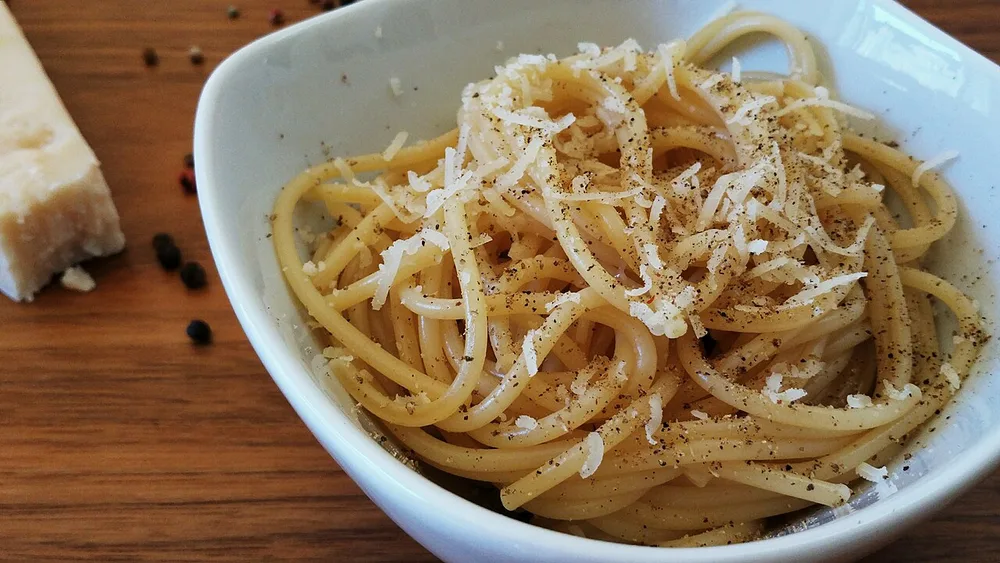
Photo: Popo le Chien, CC BY-SA 3.0 Cacio e pepeCacio e pepe
History
Cacio e pepe means cheese and pepper, and it is linked to the shepherds of the Roman countryside, who carried long-keeping pecorino and pepper. It is one of the four classic Roman pastas, with carbonara, amatriciana and gricia.
How it is made
Tonnarelli or spaghetti is cooked and tossed with finely grated pecorino romano, freshly cracked black pepper and starchy pasta water. Emulsified quickly, the cheese and water form a creamy sauce with no butter or cream.
How to eat it
The sauce should be smooth, not clumpy, which is the sign of a skilled cook.
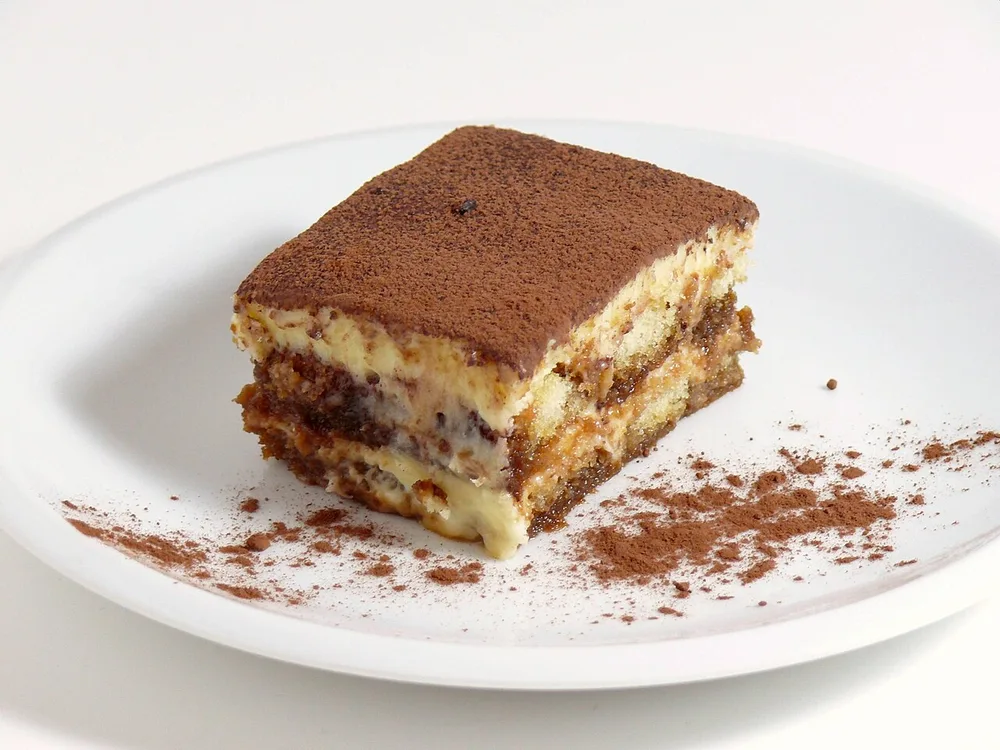
Photo: Raffaele Diomede from Pordenone, ITALIA, CC BY 2.0 TiramisuTiramisù
History
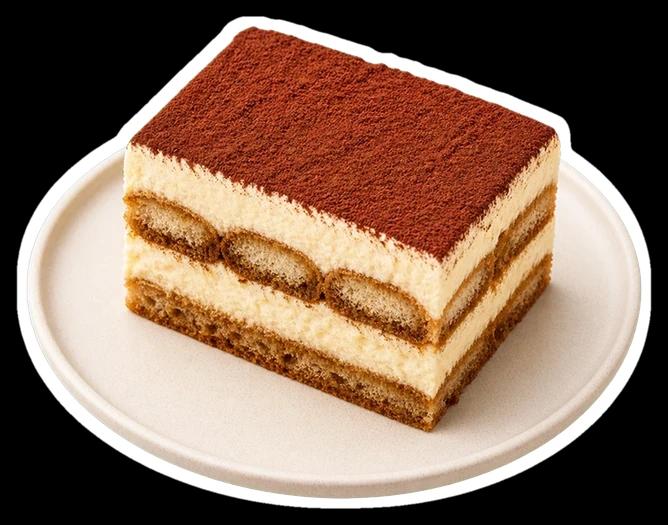
Tiramisu is a recent invention, usually credited to the restaurant Le Beccherie in Treviso in the late 1960s or early 1970s, though Friuli also claims it. Its name means pick me up.
How it is made
Ladyfinger biscuits (savoiardi) are dipped in strong coffee and layered with a cream of mascarpone, egg yolks and sugar. It is chilled for hours and dusted with cocoa powder.
How to eat it
Look for biscuits that are soaked but not soggy, and a light, airy cream.
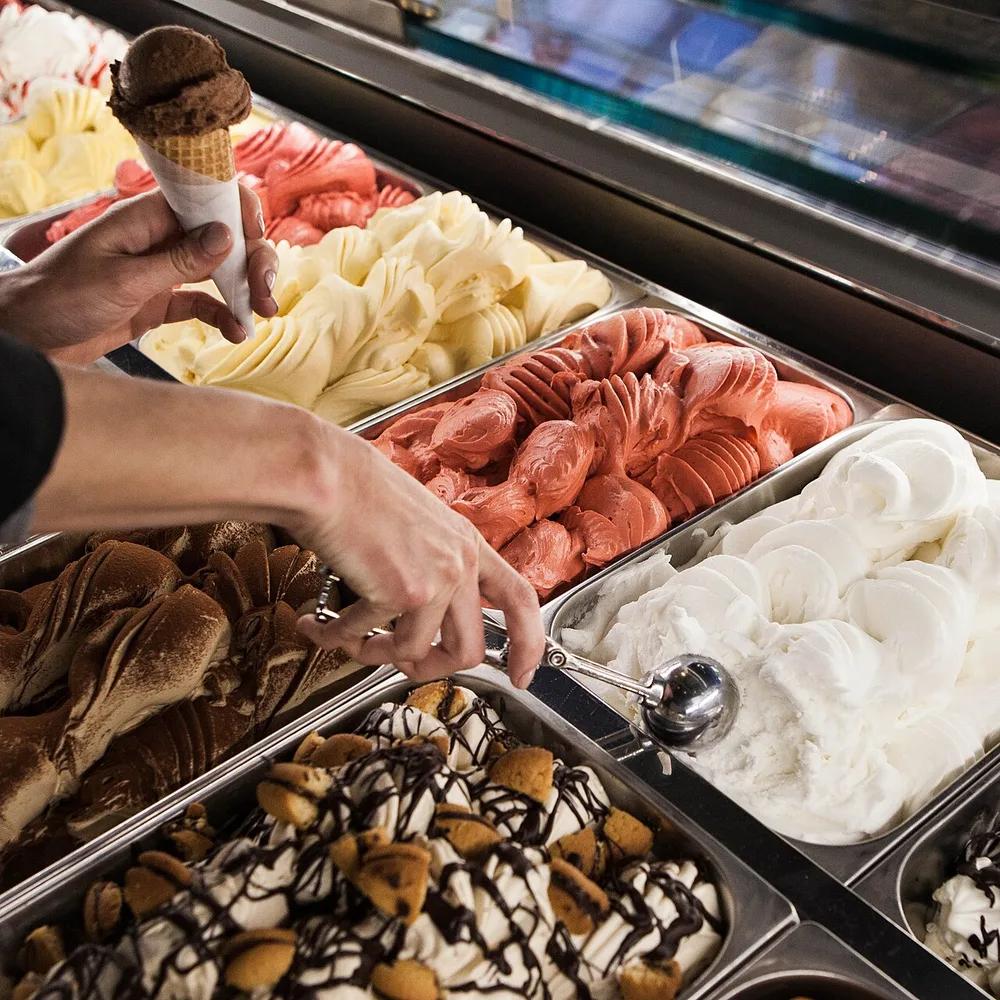
Photo: EquipmentAndConcepts, CC BY-SA 4.0 GelatoGelato
History
Bernardo Buontalenti is credited with an early gelato for the Medici court in Florence around 1565, and in 1686 the Sicilian Francesco Procopio dei Coltelli opened Café Procope in Paris, helping spread Italian ices across Europe. Gelato remains a daily street treat throughout Italy.
How it is made
A base of milk, sugar and sometimes cream or egg yolks is flavoured with fruit, nuts or chocolate. It is churned slowly, which adds less air than ice cream, and served slightly warmer, so it tastes dense and intense.
How to eat it
Avoid towering neon mounds; good gelato is stored flat or in covered tins and has natural colours, such as greyish-green pistachio.
Questions
What are the most famous Italian dishes?
Pizza, carbonara, lasagne, risotto and tiramisu are the best known, along with gelato.
Does real carbonara have cream?
No. Roman carbonara is made with egg, pecorino, guanciale and black pepper. The sauce comes from the egg and cheese.
What is the difference between gelato and ice cream?
Gelato has less fat and less air than ice cream, and is served slightly warmer, so it tastes denser and more intense.

Your next meal
is a collectible.
ate is out on Google Play. Snap your next plate and start the collection.
Get it on Google PlayFree · Android 8.0 or newer